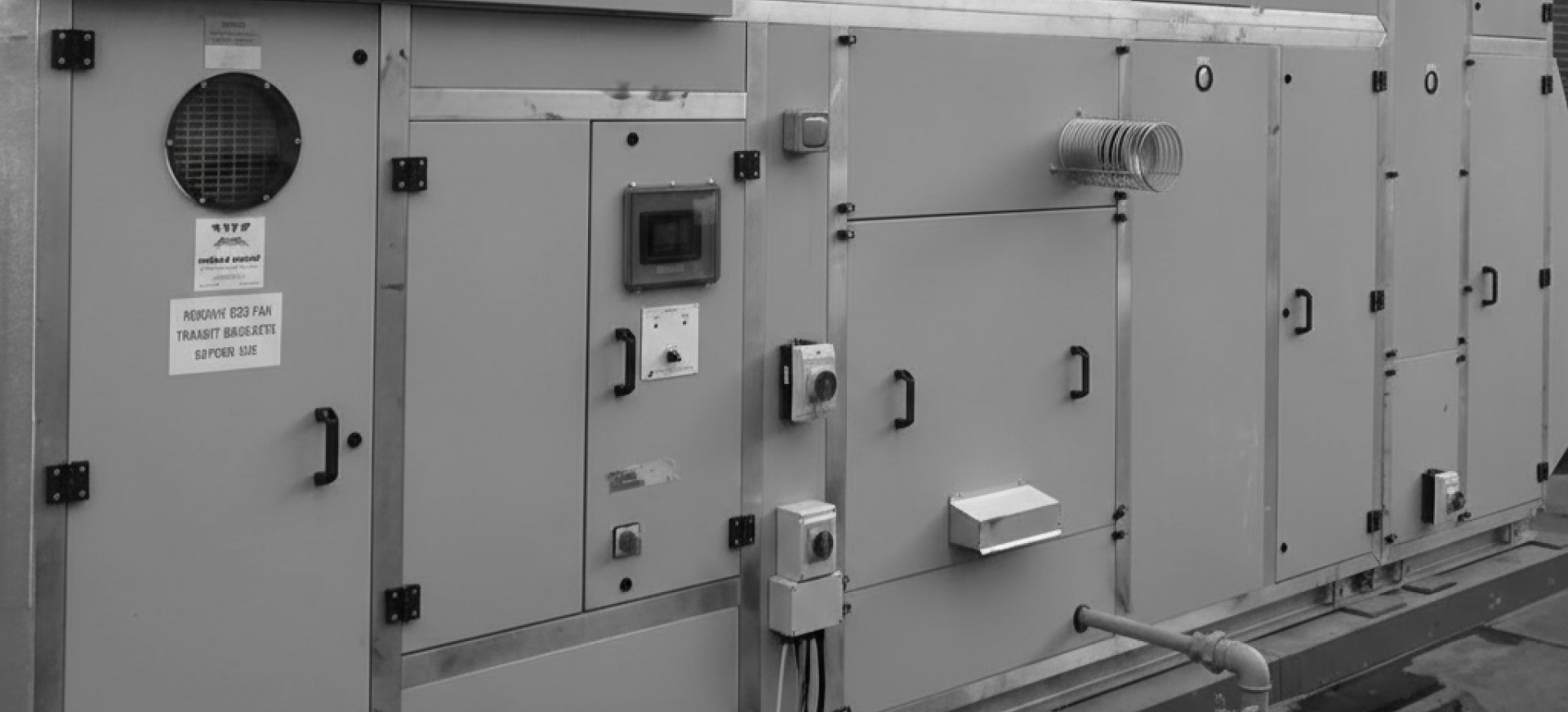
Air handling units (AHUs) are a vital part of modern HVAC systems, helping to regulate indoor air quality, temperature and ventilation in commercial, industrial and large residential buildings. Whether installed in an office, hospital, warehouse or manufacturing facility, an AHU plays a central role in delivering clean, conditioned air throughout a building.
Understanding how an air handling unit works, its key components and the maintenance it requires can help facility managers and building owners improve efficiency, reduce operating costs and extend equipment lifespan.
An Air Handling Unit (AHU) is a mechanical device designed to condition and circulate air as part of a heating, ventilation and air conditioning (HVAC) system. It typically consists of a large metal enclosure containing various components that filter, heat, cool, humidify or dehumidify air before distributing it through a building's ductwork.
AHUs are commonly located in plant rooms, rooftops or dedicated mechanical spaces and are available in a wide range of sizes to suit different applications.
The primary function of an AHU is to:
An AHU operates by drawing air from outside the building, recirculated indoor air, or a combination of both. This air passes through a series of components that clean and condition it before it is distributed through the ventilation system.
The basic airflow process follows these steps:
This continuous cycle helps maintain a comfortable, healthy indoor environment while supporting energy-efficient building operation.
Although AHUs vary in design, most systems contain the following core components.
Air filters are one of the most important elements of an AHU. They remove airborne particles such as:
Different filtration grades may be used depending on the environment. Hospitals, laboratories and cleanrooms often require high-efficiency filtration systems.
Fans generate the airflow needed to move conditioned air through the building.
Common fan types include:
Variable speed drives (VSDs) are frequently used to improve energy efficiency by adjusting fan speed according to demand.
Heating coils warm the incoming air when indoor temperatures need to be increased.
These coils may use:
Heating coils are particularly important during colder months when fresh outdoor air must be warmed before distribution.
Cooling coils reduce air temperature and help remove excess humidity.
They typically use chilled water or refrigerant-based systems to cool the air before it enters occupied spaces.
Dampers control airflow throughout the AHU.
They regulate:
Proper damper operation is essential for maintaining ventilation rates and energy efficiency.
In environments where humidity control is critical, AHUs may include humidification systems.
These are commonly found in:
Many modern AHUs incorporate heat recovery technology to improve efficiency.
Heat exchangers transfer energy from outgoing exhaust air to incoming fresh air, reducing heating and cooling loads while lowering energy consumption.
Airflow management is critical to AHU performance.
A well-designed AHU must provide the correct volume of air while maintaining the required pressure and temperature conditions throughout the building.
Supply air refers to the conditioned air delivered to occupied spaces through ductwork.
Return air is collected from occupied areas and transported back to the AHU for reconditioning.
Fresh outdoor air is introduced to maintain healthy indoor air quality and meet ventilation standards.
Exhaust air removes contaminants, odours and excess heat before being discharged outside.
Balancing these airflow streams helps maintain occupant comfort while reducing energy waste.
These are factory-built units supplied as complete systems. They are commonly used in commercial buildings and can simplify installation.
Modular units consist of multiple sections that can be customised for specific project requirements.
Installed on building roofs, rooftop units save internal floor space while providing easy access for maintenance.
Designed for environments with strict cleanliness requirements, such as hospitals and pharmaceutical facilities.
Routine maintenance is essential for ensuring reliable operation and preventing costly breakdowns.
Neglected AHUs can experience:
A proactive maintenance strategy can significantly improve system performance and lifespan.
Dirty filters restrict airflow and force fans to work harder.
Filters should be inspected regularly and replaced according to manufacturer recommendations.
Check for:
Early identification of issues can prevent unexpected downtime.
Dust and debris accumulation on coils reduces heat transfer efficiency.
Regular coil cleaning helps maintain performance and minimise energy use.
Ensure dampers open and close correctly and that actuators function as intended.
Blocked drainage systems can lead to leaks, water damage and microbial growth.
Sensors, thermostats and building management system (BMS) controls should be calibrated and tested periodically.
Regular airflow testing can identify issues such as blocked filters, fan inefficiencies or ductwork restrictions.
Watch for warning signs including:
Addressing these issues early can prevent more serious failures.
Professional AHU maintenance services can help organisations maximise HVAC performance, improve energy efficiency and maintain compliance with regulatory requirements.
When selecting a maintenance provider, consider:
A trusted partner can help ensure your air handling units continue to operate safely, efficiently and reliably year-round.
Air handling units are the backbone of many HVAC systems, responsible for delivering clean, conditioned air and maintaining comfortable indoor environments. By understanding AHU components, airflow principles and maintenance requirements, facility managers can improve system efficiency, reduce operating costs and extend equipment lifespan.
Regular inspections, filter changes, coil cleaning and performance monitoring are essential for keeping AHUs operating at their best. With a proactive maintenance strategy, businesses can protect their investment while ensuring optimal indoor air quality and occupant comfort.
Warm Air and Radiant Heating Specialists